what does it mean to have an mri with contrast?
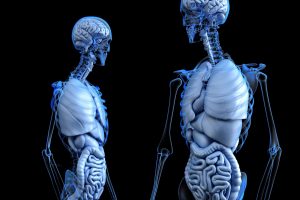
MRI with contrast should be ordered when a more than detailed view of organ structure and role is needed; a detailed view of inflammation, analysis or diagnosis of a reported tumor, or to analyze blood menses and supply. Contrast allows for more detailed and clearer image capturing and is useful in the assessment and diagnosis of a diverseness of illness processes.
When to social club dissimilarity:
The information below was taken directly from a nautical chart past Mayfair diagnostics. It may be helpful to review the nautical chart in its entirety if you are curious if contrast may exist useful in your imaging. The chart likewise includes ordering suggestions for without contrast, for MRA diagnostics and how to write a md's gild.
Clinical indications for ordering MRI with contrast may include merely are not express to the post-obit:
Extremities
- Osteomyelitis for ANY extremity; spine or general infection
- Soft tissue mass of Whatever extremity or joint
- Palpable mass, neuroma, tumor of the LOWER extremities (femur, tibia, fibula, dogie)
Brain
- Report of tumor, history of cancer, Bong'due south palsy, seizures
- Known acoustic neuroma, prior surgery for acoustic neuroma
- Written report of pituitary adenoma, tumor, abnormal prolactin, galactorrhea, amenorrhea
- History of visual disturbances, proptosis, optic nerve
- Soft tissue cervix mass
Spine
- Cervical spine: Multiple Sclerosis, spinal tumor, infection, syrinx
- Thoracic spine: Multiple Sclerosis, spinal tumor, infection, syrinx, previous surgery inside final 5 years
- Lumbar spine: spinal tumor, infection, syrinx, post-operative spinal surgery
Body
- Chest: Evaluate mass or pain, rib cartilage, diaphragm
- Abdomen: Tumor, liver or pancreas evaluation
- Liver, pancreas, kidney (renals)
- Pelvis: Pelvic pain, mass, surgical planning
- Pelvic pain, mass, surgical planning, gynecological abnormalities
- Renal: Report of renal tumor, kidney tumor or mass
- Breast: History of breast cancer, abnormal diagnostic mammogram, aberrant diagnostics ultrasound (requires recent mammography report)
*Typically when the previously mentioned items are ordered they are ordered "with and without contrast." Likely 2 images will be taken (1 with contrast and 1 without) in lodge to compare the two images.
What is an MRI?
MRI stands for Magnetic Resonance Imaging.
MRI is a technique using magnetics, radio frequency pulses and computer technology to have detailed pictures of the body. Information technology allows medical professionals to come across anatomical structure and part, or in simpler terms: it let'southward a md take picture of a specific area of the body (an organ, bone, or tumor for instance) and analyze what it looks similar and how it is working.
Why use an MRI?
Frequently MRI is used to help provide a diagnosis, decide the progression of diseases, and make up one's mind organ function.
What is contrast?
The contrast is a substance introduced into the bloodstream that provides additional visual particular under an MRI. The substance that is usually used in MRIs is called gadolinium, a heavy metal. Information technology works with the electromagnetic engineering science of the MRI to provide a sharper prototype of the organ of interest.
Sometimes contrast is ordered by a medico to be administered during the MRI. Contrast helps to make the images taken during an MRI clearer. Simply, a contrast agent (chemical substance or "dye") is injected into a blood vein that helps to make the organs and claret flow show up improve in the pictures.
Why use contrast?
Contrast helps provide a more than detailed and easier to read image.
So, why not utilize it all the time? Not every MRI will require the use of contrast–only cases where a more detailed analysis is required. There also can be some risks using contrast, therefore it is non used all the time.
On the other hand, sometimes a physician may want images both with and without dissimilarity.
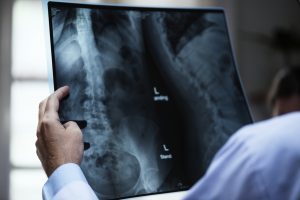
What practise I need to know?
Contraindications:
As a patient, you will want to exist sure to tell your doctor, radiologist (the person who interprets your images), or other medical professionals if you have or accept had kidney problems. Contrast is eliminated from the torso through the kidneys. If your kidneys have less than normal office or are more susceptible to impairment y'all should non receive dissimilarity. (It should be noted all the same that in some cases medical professionals may still recommend the employ of dissimilarity if the risk of other illness outweighs the take chances of damage to the kidneys.)
What to expect if I receive dissimilarity:
Common symptoms felt by patients who receive contrast agents are:
- Metallic taste
- Urge to pee
- Warm sensation
Other symptoms may include dizziness, nausea or vomiting, and headache.
Uncommon symptoms are severe allergic reaction, and nephrogenic systemic fibrosis (NSF). "Nephr"– refers to kidney. This symptomatic disease is much more probable to occur if you take a pre-existing kidney illness. Primary indicators of NSF are internal organ damage and skin thickening and/or tightening.
How does the contrast enter my body?
A medical staff person will administrate the contrast into a claret vein. Sometimes this is done manually and sometimes with an electronic pump. It is a quick injection, approximately ten-30 seconds.
How does the dissimilarity exit my body?
As mentioned previously, dissimilarity agents (specifically gadolinium dissimilarity) is eliminated through the kidneys. Kidneys are your body'due south blood filters–they run claret through an intricate system of filtration and take out what doesn't vest. The collection of filtered toxins, etcetera, (in this case filtered gadolinium contrast) is run past small-scale tubes into your bladder and so released from the body in the form of urine.
There is some contempo research that has shown modest amounts of gadolinium being retained in basic and some tissues of the brain. The amounts are very minuscule and thus far there has been no prove of agin or negative effects on the trunk from retained dissimilarity. However, considering of this recent finding, doctors are much more cautious in their recommendations to use dissimilarity.
Pregnancy and breastfeeding:
If y'all are pregnant or think you might be it is important to communicate this data with your doctor. Likely you will not receive dissimilarity but in some cases where information technology is essential to your health and safety it may be recommended. You doc volition review the risks and benefits of MRI scanning and dissimilarity injection with you prior to the imaging.
It is considered safe to breastfeed later receiving gadolinium contrast. However, please review with your primary intendance physician or pediatrician prior to doing and then! Similarly to gadolinium retentiveness in bones and brain tissue, equally mentioned previously, at that place take been minuscule amounts that have shown up in breastmilk after gadolinium injection. Still, there has been no indications of needing to dispose of breast milk before feeding your babe. 1 article notes that 1/1000th of the amount of the contrast you receive may be found in breast milk and of that, what your baby may ingest is so pocket-size that it is non thought to present any danger to the infant.
Resources:
Mayfair Diagnostics, Radiography. (2016). https://www.radiology.ca/sites/default/files/ckfinder/files/Mayfair_MRI_Reference_Charts_Regina_2016_v3.pdf
Ferris, Nick, Md. and Professor Stacy Goergen, Within Radiology. (2017). https://www.insideradiology.com.au/gadolinium-dissimilarity-medium/
Source: https://www.healthpages.org/health-a-z/when-to-order-an-mri-with-contrast/
0 Response to "what does it mean to have an mri with contrast?"
Post a Comment